Great Picture, Nothing to Watch: The Streaming Quality Gap Nobody Talks About
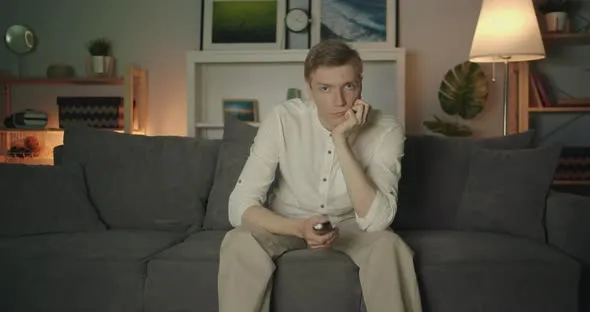
Photo: person frustrated scrolling TV remote living room dark, via s3.envato.com
There's a particular kind of frustration that hits around 8 p.m. on a Friday night. You've got a 75-inch TV, a fiber connection that could stream a dozen shows simultaneously, and access to four or five different cloud platforms. And yet — you spend 45 minutes scrolling, find nothing, and either rewatch The Office for the sixth time or just go to bed.
The technology has never been better. The content? That's a different conversation entirely.
The Infrastructure Glow-Up Was Real
Let's give credit where it's due. Cloud-based streaming delivery has come an enormous distance in a short time. Adaptive bitrate streaming, edge computing, distributed CDN networks — these aren't just buzzwords. They're the reason your show loads in under two seconds and rarely drops a frame, even when half your neighborhood is also streaming during primetime.
Platforms have invested billions into the plumbing. And it shows. Watching a nature documentary in 4K Dolby Vision on a modern streaming service is genuinely a different experience than anything cable offered five years ago. The signal is clean, the latency is low, and the delivery is almost invisible — which is exactly how good infrastructure is supposed to work.
But here's the thing about invisible infrastructure: once it works, nobody thinks about it anymore. Viewers stop being impressed by the fact that their stream doesn't buffer. They start asking what's actually on.
When the Algorithm Became the Programmer
Somewhere in the race to optimize delivery, platforms also handed over the keys to content discovery — and increasingly, content creation — to recommendation algorithms. The result is a feedback loop that feels efficient but quietly narrows what gets made and what gets seen.
Algorithms are great at identifying what you've already liked. They're much worse at introducing you to something genuinely new. When a platform's content strategy starts bending toward what the data says is safe, you end up with a library full of shows that are technically competent but creatively cautious. Think: another true crime docuseries, another rebooted IP, another reality competition with a fresh coat of paint.
This isn't a knock on any one platform — it's a systemic pattern. When subscriber retention is the north star metric, bold swings become harder to justify internally. The spreadsheet doesn't love risk. And so the content gets a little safer, a little more familiar, a little more algorithmically shaped with each budget cycle.
The Content Arms Race Burned a Lot of People Out
For a while, it seemed like the answer was just more. More originals, more exclusive deals, more content hours per month. Netflix famously chased a strategy of volume — hundreds of original titles per year — betting that something would always stick. Other platforms followed.
What viewers got was an avalanche. And paradoxically, more content made the problem worse. When everything is available and the queue is endless, decision fatigue sets in hard. Studies on consumer choice have long shown that too many options can actually reduce satisfaction — and streaming has become a live demonstration of that principle at scale.
The platforms with the deepest libraries aren't necessarily winning the satisfaction game. They're sometimes the ones where people feel most overwhelmed and least engaged. There's a real difference between a platform that has 10,000 titles and one that has 500 titles you actually want to watch.
Prestige TV Had a Peak — And We May Have Passed It
There was a stretch — roughly 2012 through 2022 — when streaming felt like it was genuinely elevating television as a medium. Breaking Bad, The Crown, Succession, Fleabag, The Bear — these weren't just popular shows, they were cultural conversations. Streaming's original content was punching at the level of prestige cinema.
That era isn't over, but it's definitely thinning out. Production budgets are being scrutinized more carefully post-pandemic. The writer's strike of 2023 disrupted development pipelines. Platforms that once greenlit ambitious projects are now more conservative. And the talent — writers, directors, showrunners — that drove that golden window is increasingly fragmented across a dozen different deals and platforms.
What's left in the gap is a lot of mid-tier content that looks great in 4K and means very little once the credits roll.
The Delivery Is Flawless. The Experience Isn't.
Here's the uncomfortable truth for streaming platforms: technical excellence is now table stakes, not a differentiator. Nobody brags about their CDN. Viewers don't tweet about their adaptive bitrate algorithm. What they talk about — what they subscribe for — is the show everyone's watching.
And right now, fewer and fewer shows are hitting that cultural critical mass. The fragmentation of audiences across platforms has made it harder for any single title to become a shared national moment the way Game of Thrones or even Tiger King once did. The pipes are perfect. The water pressure is incredible. But people are thirsty for something worth watching.
What Actually Fixes This
The platforms that figure this out first will likely win the next phase of the streaming wars. And the solution probably isn't more technology — it's more editorial courage.
That means recommending things people haven't seen rather than things adjacent to what they already watched. It means greenlit projects that take creative risks, even when the algorithm is skeptical. It means curating libraries instead of just expanding them, and being honest with subscribers about what's genuinely worth their time.
Some platforms are experimenting with human-curated collections, editorial "watch this" features, and partnerships with critics and tastemakers. It's early, but it's the right instinct. The future of streaming probably looks less like a search engine and more like a really good TV channel — one with a point of view.
At CBB TV, we believe watching in the cloud should mean watching better — not just clearer. The technology is there. Now the content needs to catch up.